
A noisy garage door is more than an annoyance — in many Coppell two-story homes the garage sits right under a bedroom, so every 6 a.m. departure rattles the whole house. The good news: most garage door noise comes from a short list of fixable causes. Here are nine proven fixes, ordered from the easiest weekend job to the ones worth calling a pro for.
Before you start: a quick safety note
You’ll be working around a heavy moving door. Keep fingers clear of hinges, rollers, and springs, never stand under a partially open door longer than necessary, and leave anything involving spring tension to a professional. Everything below respects that line.
1. Lubricate all the moving metal parts
This single step fixes a surprising number of noisy doors. Use a silicone-based spray or white lithium grease — not standard WD-40, which is a solvent and cleaner, not a lasting lubricant. Hit the hinges, roller stems and bearings, the torsion spring coils, and the bearing plates at each end of the spring shaft. Open and close the door a few times to work it in. Do this twice a year and you’ll prevent most noise before it starts.
2. Tighten every nut and bolt
Years of vibration loosen the hardware holding your tracks and hinges together. With the door closed, go over the track brackets, hinge bolts, and opener mounting hardware with a socket wrench and snug everything up — firm, not gorilla-tight, since overtightening can strip the threads or warp brackets. This alone often eliminates rattling.
3. Replace steel rollers with nylon
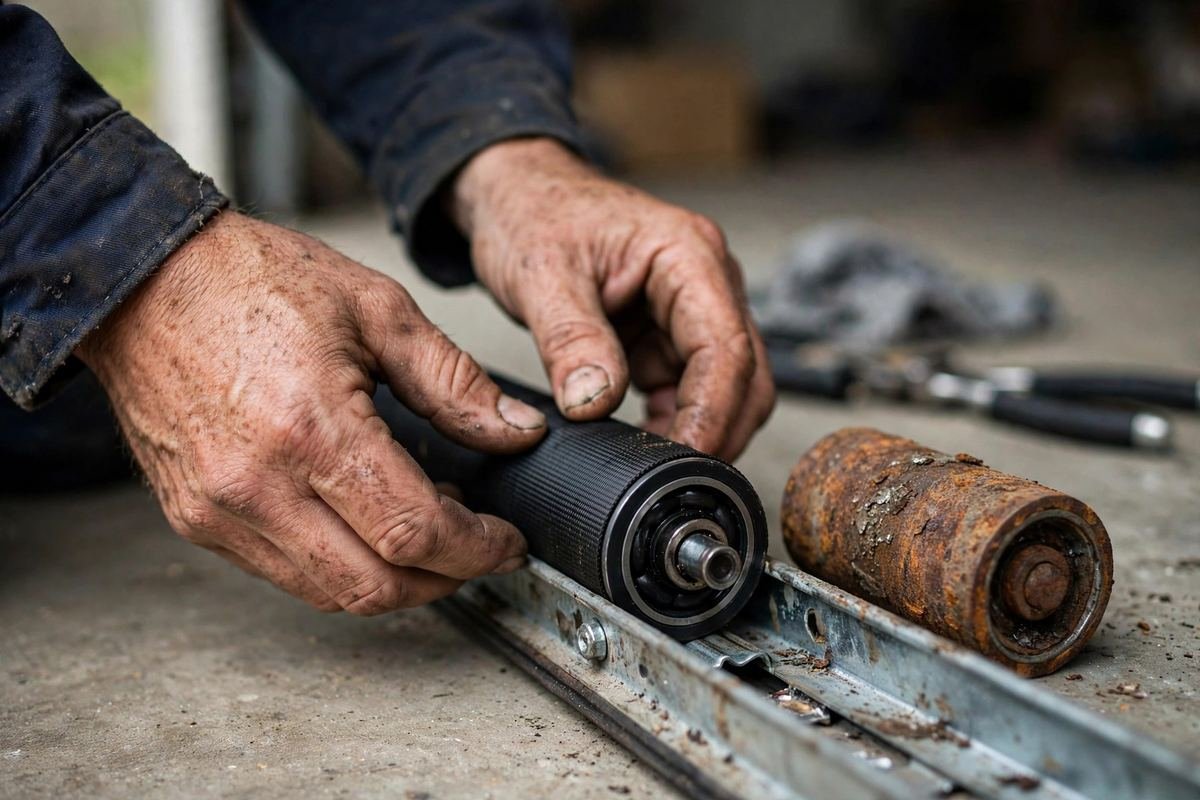
If your door still has original metal rollers, they’re the likely rumble source. Nylon rollers (ideally with sealed ball bearings) roll dramatically quieter and don’t need lubrication the way steel ones do. A full set replacement is one of the best dollar-for-decibel upgrades you can make, and it’s a common professional service because the bottom rollers require releasing track tension safely.
4. Replace worn hinges
Hinges develop play over thousands of cycles, and sloppy hinges let door sections shift and clunk against each other. Look for hinges with elongated bolt holes or visible wobble when the door moves. Hinges are stamped with numbers indicating their position — replace like with like, and consider heavy-duty hinges on wide double doors.
5. Check the opener’s chain or belt
Chain-drive openers are inherently noisier, but a loose or dry chain is much worse than it needs to be. The chain should have about a quarter to half inch of sag at its midpoint — adjust per your opener’s manual. A light application of chain-specific lubricant quiets it further. If the opener is old and loud despite adjustment, a belt-drive replacement is the long-term answer for quiet operation.
6. Test the door’s balance
A door fighting bad balance strains everything and groans about it. Disconnect the opener with the emergency release cord, lift the door manually to waist height, and let go. A balanced door stays put; one that slams down or shoots up is fighting its springs, which overloads the opener and amplifies noise. Rebalancing involves spring adjustment — that’s professional territory, but the test itself takes thirty seconds.
7. Clean the tracks (but don’t pack them with grease)
Dirt, hardened old grease, and even small pebbles in the tracks make rollers thump and grind. Wipe the inside of the vertical and horizontal tracks with a damp rag and remove debris. Contrary to instinct, don’t glob grease into the tracks — it attracts Texas dust and turns into grinding paste. Rollers are meant to roll on clean metal.
8. Replace a dried-out bottom weather seal
A stiff, cracked rubber seal along the door’s bottom edge drags and squeaks against the concrete every cycle. Seals slide out of their retainer channel and replacements are inexpensive. While you’re at it, check the side seals too — fresh seals also cut dust and keep garage heat down in summer.
9. Listen to the springs and bearing plates
A loud creak or groan on every cycle often comes from dry torsion spring coils or worn bearing plates at the shaft ends. Lubricating the coils helps; if the noise persists, the bearings may be worn. Because this area stores serious energy, have a technician inspect it rather than disassembling anything yourself.
When noise means “call a pro”
Grinding metal-on-metal, loud bangs, or a door that shakes violently are beyond DIY — they point to failing rollers, a breaking spring, or track damage. Forcing a door in that condition turns a minor repair into a major one.
Hearing grinding, banging, or popping from your garage? Call Coppell Garage Door Experts at (945) 404-0050 — we’ll find the noise source and quiet it down properly.
Garage Door Services at a Glance
| Service | Typical range* |
|---|---|
| Spring replacement | $180 – $350 |
| Opener repair | $150 – $300 |
| Cable replacement | $150 – $250 |
| Roller replacement | $150 – $300 |
| Maintenance tune-up | $99 – $179 |
*Typical Coppell-area ranges.