
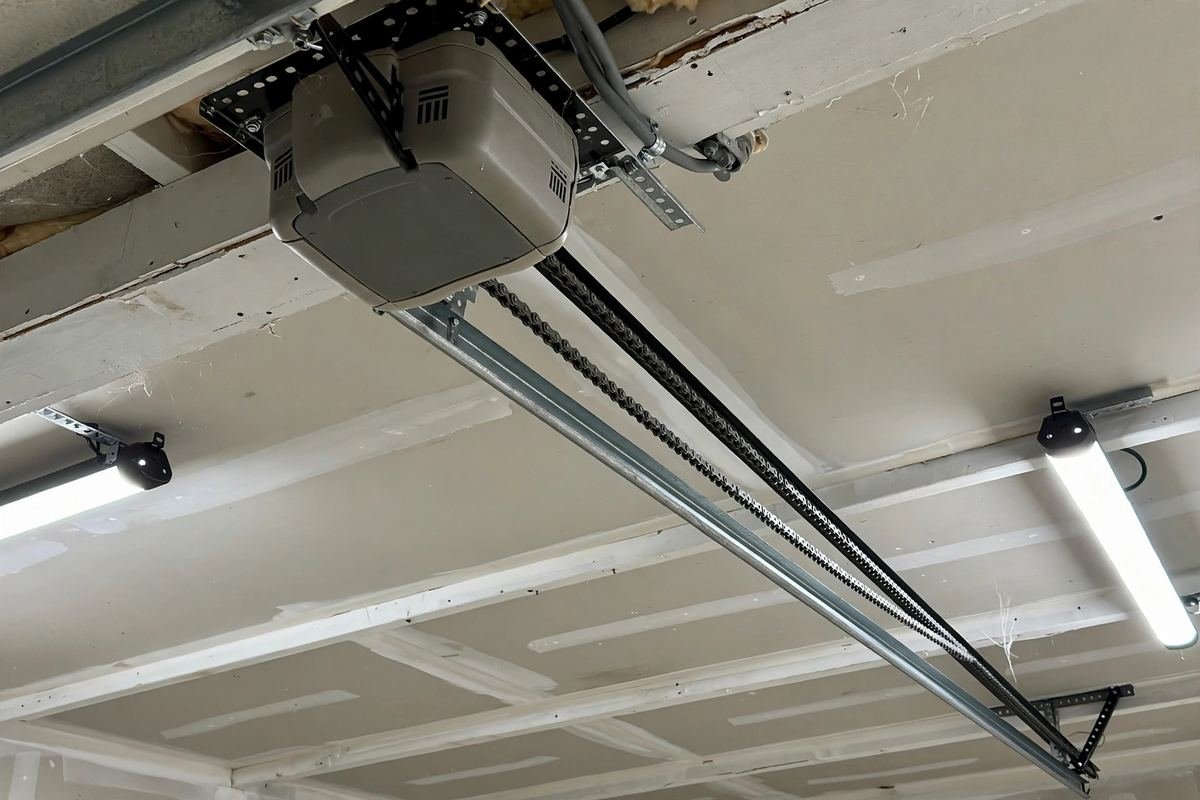
“Which opener is quieter?” is one of the most common questions we hear — usually from someone with a bedroom above the garage. The short answer: belt drive, by a clear margin. But the full answer has more nuance, so let’s break it down properly.
How Chain Drives Work (and Why They’re Loud)
A chain drive pulls the trolley along the rail with a metal bicycle-style chain. It’s the oldest opener design, it’s tough, and it handles heavy doors well. The downside is physics: metal links engaging metal sprockets under load, hundreds of times per cycle, makes noise. A well-maintained chain drive produces a characteristic rattle and clatter that’s perfectly fine for a detached garage but noticeable through a shared wall or ceiling.
How Belt Drives Work (and Why They’re Quiet)
A belt drive replaces the chain with a reinforced rubber-and-steel belt — similar in concept to a car’s serpentine belt. No metal-on-metal contact means the drive mechanism itself is nearly silent; what you hear is mostly the door’s rollers and the motor’s soft hum. The difference is immediately obvious side by side.
Noise Comparison at a Glance
| Drive type | Typical noise level | What it sounds like |
|---|---|---|
| Chain drive | ~70–75 dB | Noticeable rattle; heard through walls |
| Belt drive | ~60–65 dB | Soft hum; barely heard upstairs |
| Screw drive | ~65–70 dB | Between the two; needs regular lubrication |
| Direct (jackshaft) drive | ~60 dB | Very quiet; mounts beside the door |
Figures are approximate — actual noise depends heavily on the door’s rollers, balance, and installation quality.
But the Door Matters More Than the Drive
Here’s what opener marketing won’t tell you: the noisiest part of most garage door systems is the door itself, not the opener. Worn steel rollers, dry hinges, and loose hardware can make even a premium belt drive sound rough. Before paying extra for quiet, consider that a roller replacement and tune-up on your existing door often delivers a bigger noise reduction per dollar than a drive-type upgrade alone. The quietest setup is a belt drive plus nylon rollers and proper lubrication.
Cost and Durability Comparison
| Factor | Chain drive | Belt drive |
|---|---|---|
| Typical installed cost | $350–$500 | |
| Belt-drive premium | — | Roughly $50–$100 more |
| Maintenance | Occasional chain tensioning | Virtually none |
| Lifespan | 15–20 years | 15–20 years |
| Best for | Detached garages, tight budgets, very heavy doors | Attached garages, bedrooms above, noise-sensitive homes |
Which Should You Choose?
Choose belt drive if your garage is attached to the house, there’s living space above or beside it, or you run the door early in the morning or late at night. The roughly $50–$100 premium pays for itself in daily quality of life. Choose chain drive if the garage is detached, budget is the priority, or the door is exceptionally heavy (some commercial-style residential doors). Either way, pair it with nylon rollers and a proper installation — that’s where the real quiet comes from.
What About Screw Drive and Jackshaft Openers?
Chain and belt dominate the market, but two other designs exist. Screw drive openers move the trolley along a threaded steel rod — fewer moving parts than chain, moderately quiet, but they need periodic lubrication of the screw and can be sluggish in very cold weather. Jackshaft (wall-mount) openers attach to the wall beside the door and turn the torsion bar directly — no rail, no chain, no belt overhead. They are the quietest option of all and free up ceiling space, but they cost more and only work with sectional doors that have a torsion spring system.
Installation Quality Matters More Than the Drive Type
Two identical belt-drive openers can sound completely different depending on installation. A rail that is perfectly level, mounting brackets secured to solid framing (not just drywall), and a door that is properly balanced will make even a chain drive tolerable — while a sloppy install can make a premium belt drive rattle. When comparing quotes, ask what is included: rail bracing, vibration isolation, and a full door tune-up alongside the opener swap are the details that determine how quiet the finished job actually is.
Not sure which opener suits your home? Call Coppell Garage Door Experts at (945) 404-0050 — we’ll assess your door, your layout, and your budget, then recommend honestly.