
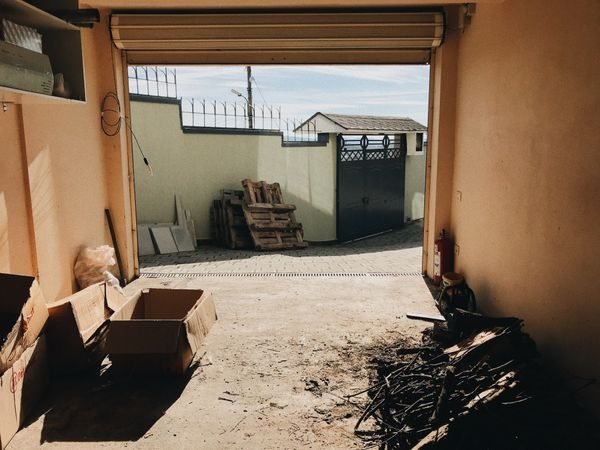
Close your garage door on a sunny day and look at the bottom edge. If you see daylight streaming underneath — or worse, you’ve noticed water, leaves, or insects getting in — the bottom seal has failed or the door isn’t seating properly. In Texas, that gap also means hot air pouring in all summer and your AC working overtime. The good news: most gap problems are fixed with inexpensive weather sealing you can do yourself in an afternoon.
Why gaps happen
- Worn bottom seal: the rubber or vinyl astragal on the door’s bottom edge hardens, cracks, and compresses over 3–5 years, especially in Texas heat.
- Uneven concrete: driveways and garage floors settle and crack over time, creating low spots the flat door bottom can’t follow.
- Door not closing fully: misadjusted close limits or weak springs can leave the door hovering slightly instead of seating firmly.
- Bent bottom panel: an impact can bow the bottom section so it no longer sits flat.
Fix 1: Replace the bottom weather seal (the most common fix)
The bottom seal slides into a retainer channel on the door’s bottom edge. When it wears out, replacement is straightforward:
- With the door closed, pull the old seal out of the retainer track — it slides out from one end.
- Measure the door width and buy the correct profile (T-shaped and P-shaped are most common — bring a small piece of the old one to match).
- Clean the retainer channel, then slide the new seal in from one end. A little soapy water helps it glide.
- Trim the excess with a utility knife and check the seal compresses evenly when the door closes.
Cost is typically $15–$40 for the seal itself. If the retainer channel is damaged or the bottom panel is bent, that’s a professional repair.
Fix 2: Add a threshold seal for uneven floors
When the concrete itself is uneven, a new door seal alone can’t bridge dips and low spots. A threshold seal — a heavy rubber strip glued to the floor where the door lands — conforms to the floor’s shape and fills gaps up to about an inch.
- Clean the concrete thoroughly where the seal will sit (degrease — adhesion is everything).
- Dry-fit the threshold, then glue it down with the recommended adhesive, usually a polyurethane caulk.
- Let it cure fully (typically 24 hours) before driving over it.
Threshold seals run roughly $30–$60 and handle both uneven floors and minor water intrusion — a big win in a single project.
Choosing the right fix
| Gap situation | Best fix |
|---|---|
| Even gap, seal looks cracked or flat | Replace the bottom weather seal |
| Gap only in spots, floor visibly uneven | Add a threshold seal |
| Gap plus water intrusion | Threshold seal (taller profile) |
| Door visibly not closing all the way | Check close-limit settings or springs — may need a pro |
| Gap with a bent or damaged bottom panel | Professional panel repair |
When the gap signals a bigger problem
If the door used to seal fine and a gap appeared suddenly, check whether the door is closing fully — a broken spring or slipped cable can leave the door sitting high on one side. If the bottom panel is bowed from an impact, seals won’t fix the geometry. And if you’ve replaced the seal and the gap persists on one side only, the door may be out of level, which points to spring or cable issues that need professional diagnosis.
Bonus benefits of a good seal
Beyond blocking drafts and pests, a proper bottom seal reduces dust infiltration (a constant battle in Texas), quiets the door’s closing thud, and protects against the sudden downpours that push water under garage doors. It’s one of the cheapest improvements with the most noticeable daily payoff.
Gap that won’t quit, or a door that won’t seat properly? Call Coppell Garage Door Experts at (945) 404-0050 — we’ll find the real cause and seal it right.